Launch offer — valid today only

📄 Digital book in PDF · read it on your phone or print it

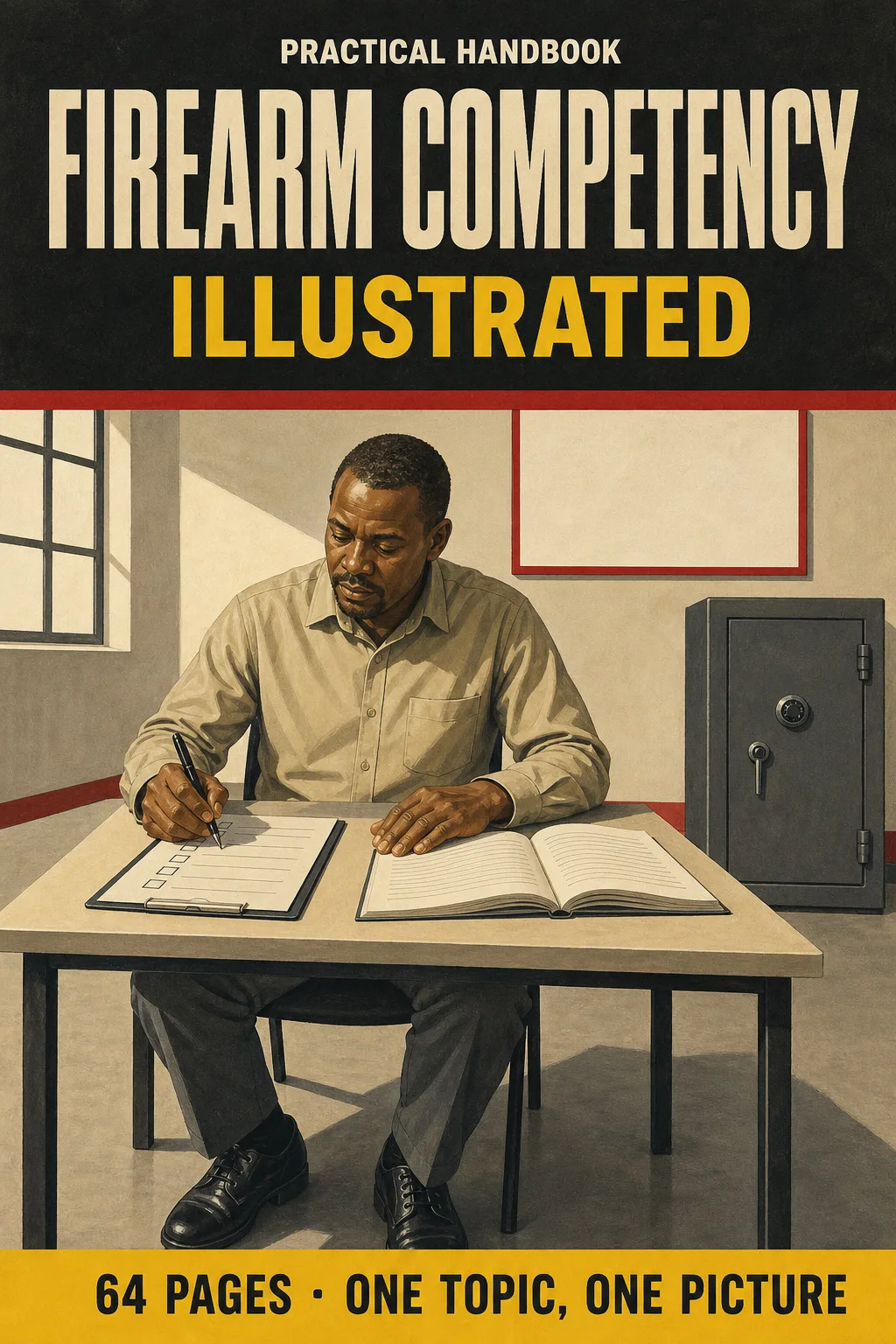
Firearm Competency, Illustrated: Every Safety Routine, Always in the Same Order One Topic on Every Page

For the South African competency process, checked against the Firearms Control Act 60 of 2000: competency or licence, the Act in plain words, the handgun, rifle and shotgun, the cartridge, the four safety rules, making a firearm safe, range commands and the safe at home. One topic per page: first the drawing, then what you need to remember. 64 illustrated pages.

YES, I WANT THE ILLUSTRATED BOOK

🔒 Secure checkout · PDF by email · 30-day guarantee

Every topic, its own pageEvery safety routine drawn as numbered steps, with the explanation beside it
64 illustrated pages8 parts, from the competency certificate to assessment-day review
Up-to-date sourcesFirearms Control Act 60 of 2000, its 2004 Regulations and the SAQA unit standards
PDF by emailFormat

Look Inside the Book

Every page has one large drawing and a box with the steps and rules you need to know:

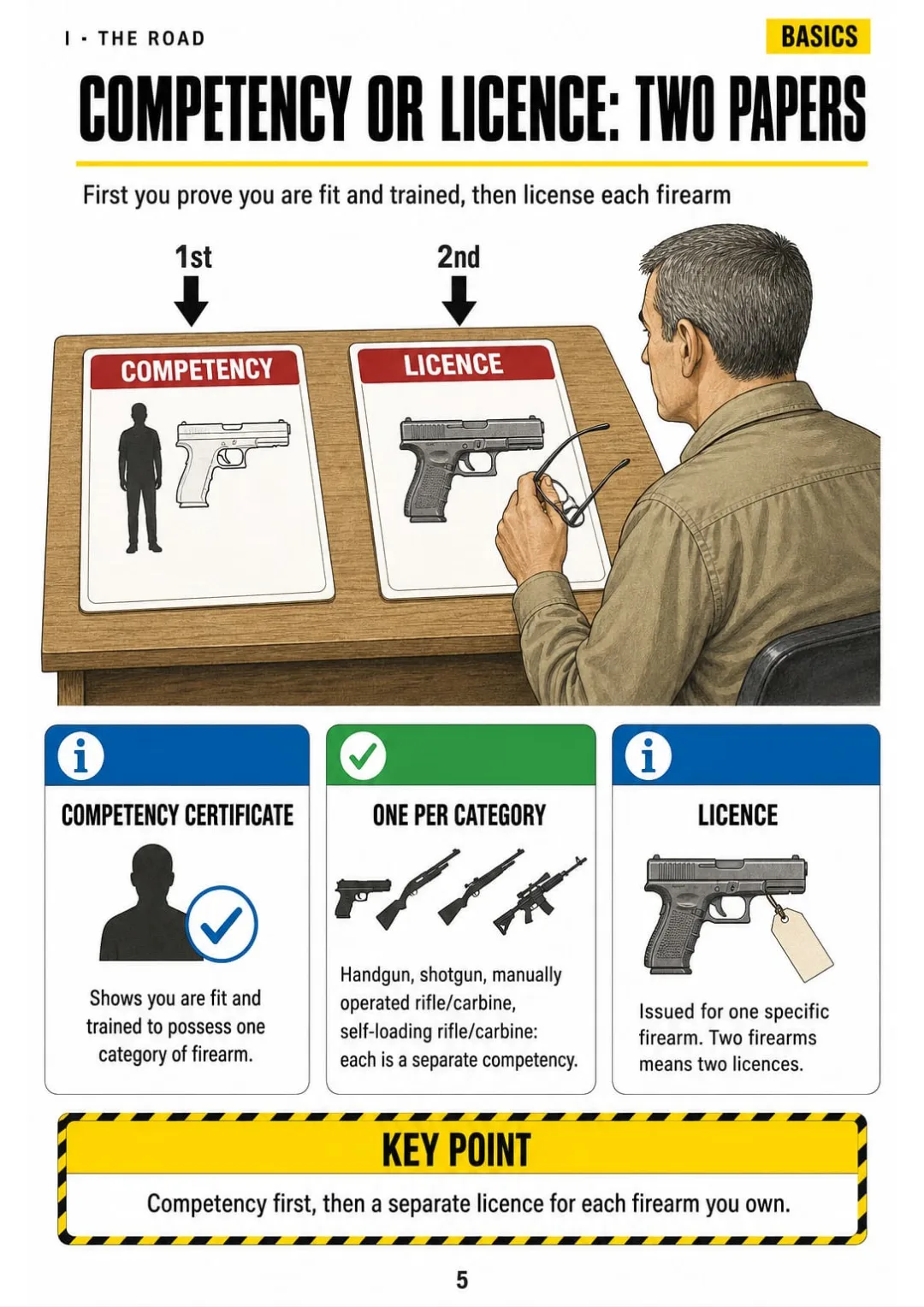
Competency per category, licence per firearm: two different papers, in that order.
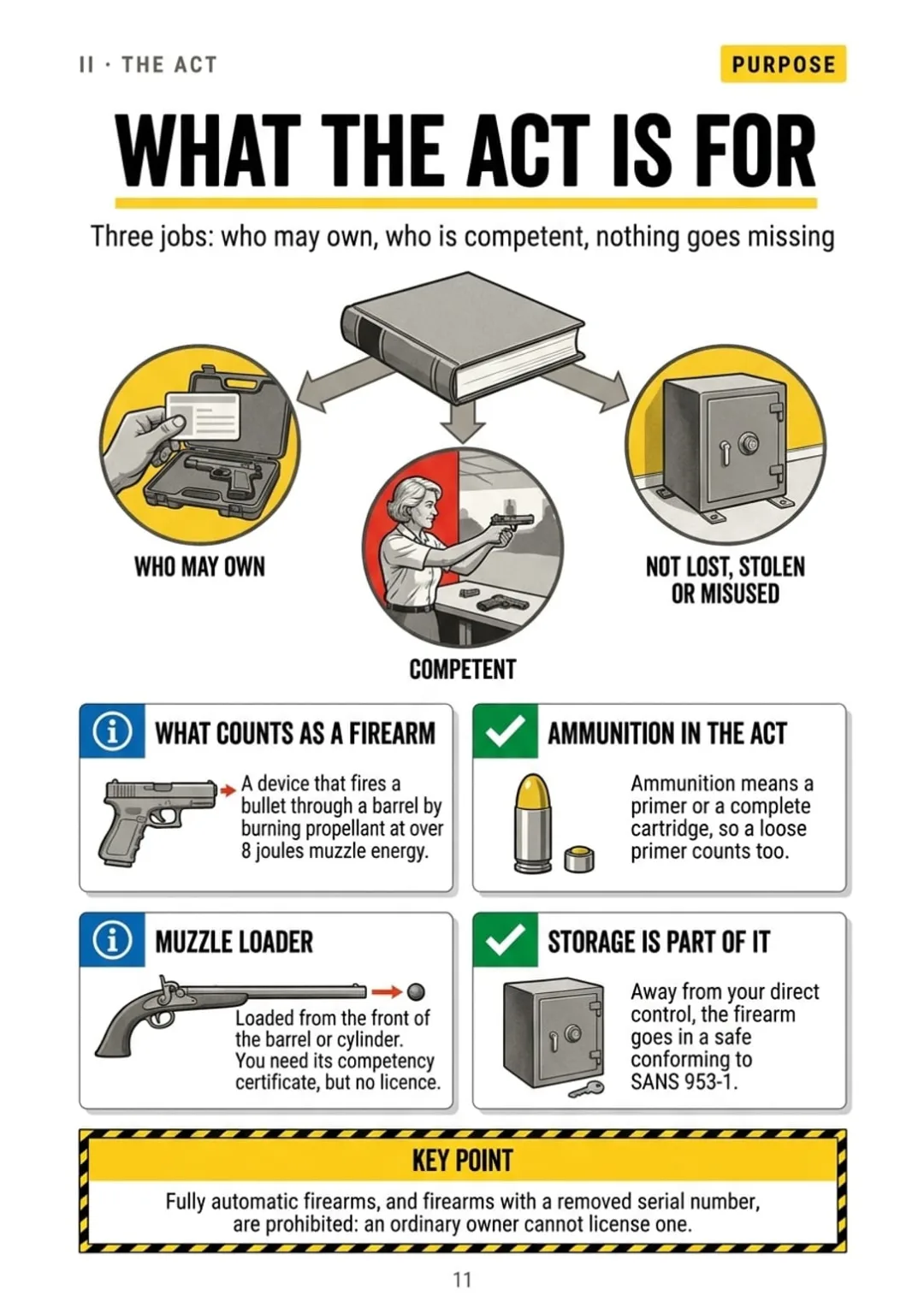
The Act's three jobs and four key terms: firearm, ammunition, muzzle loader, prohibited firearm.
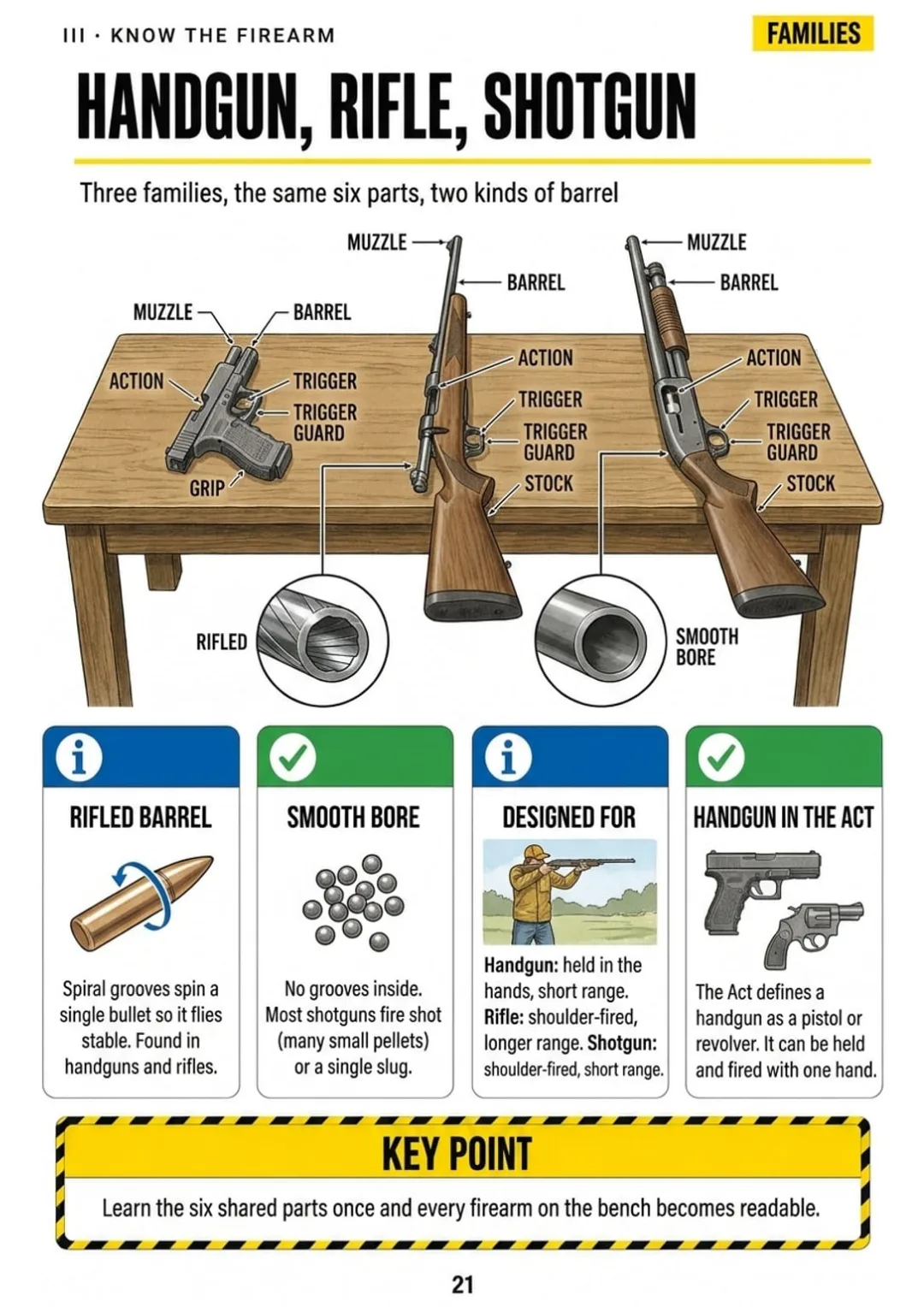
Muzzle, barrel, action, trigger, guard, stock or grip: the same labels on all three families
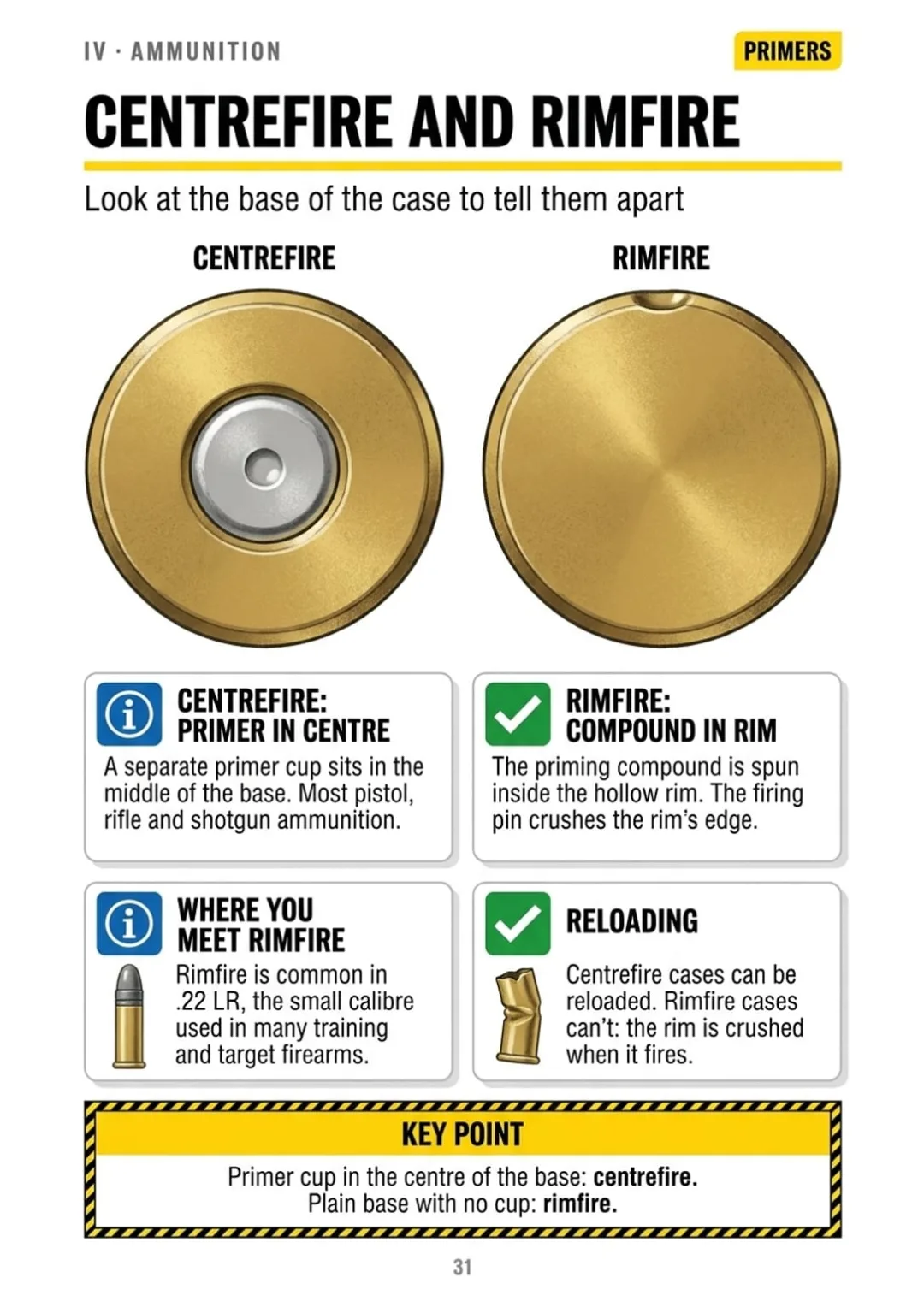
Centrefire or rimfire: where the primer sits and why .22 LR cases can't be reloaded
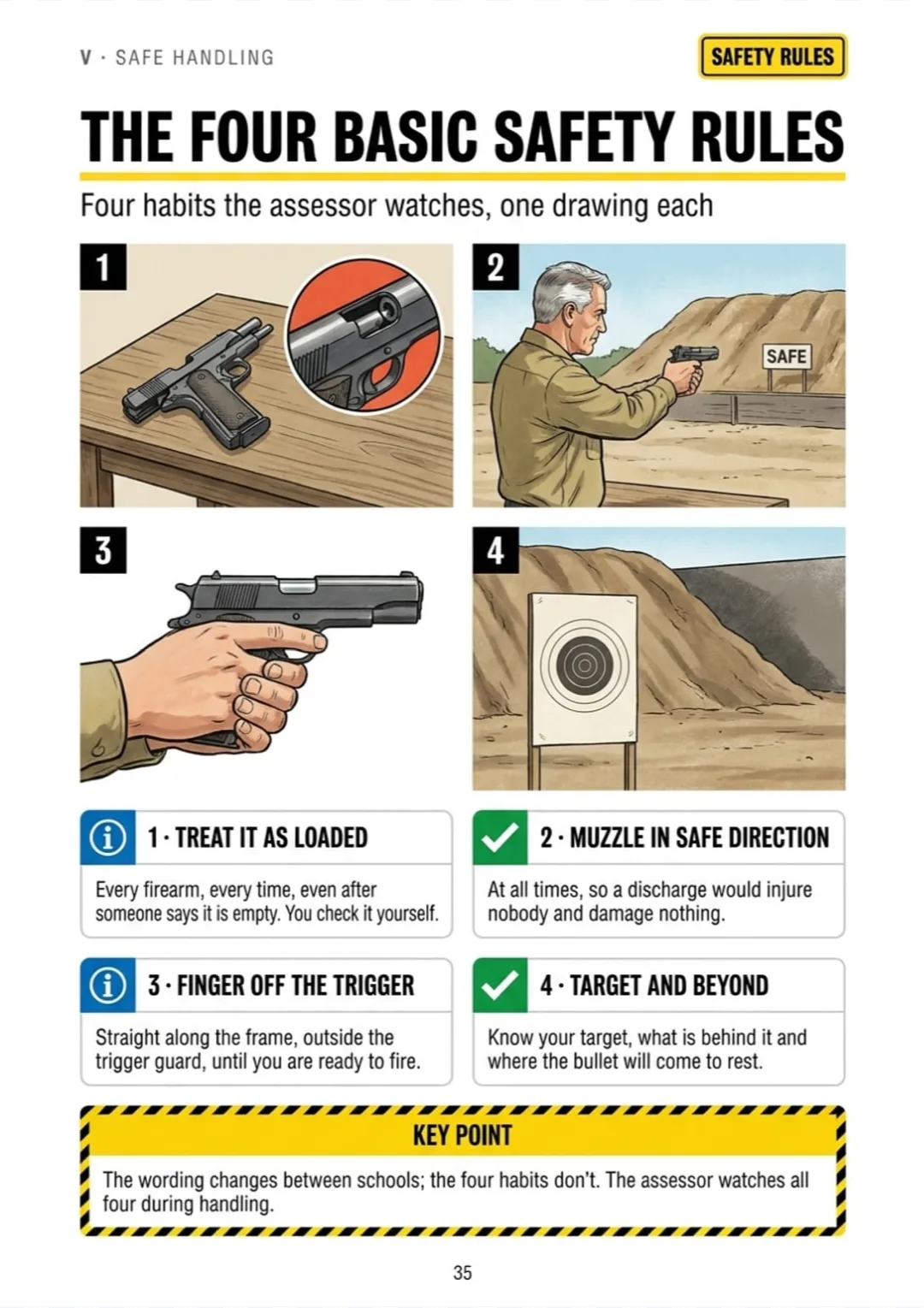
Loaded, muzzle, finger, target: the four habits behind every handling outcome
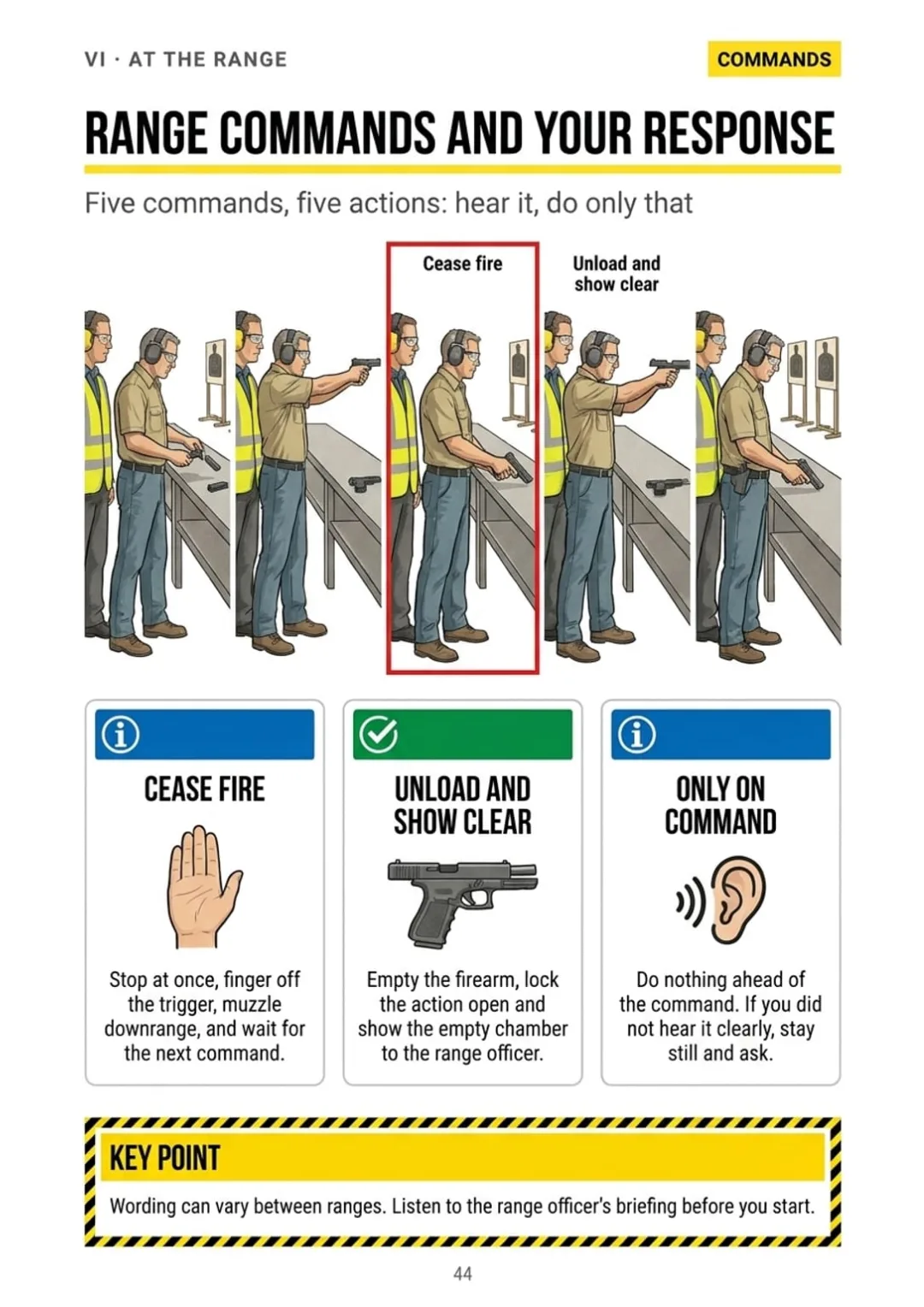
Load and make ready, Fire, Cease fire, Unload and show clear, Holster: each drawn with its action.
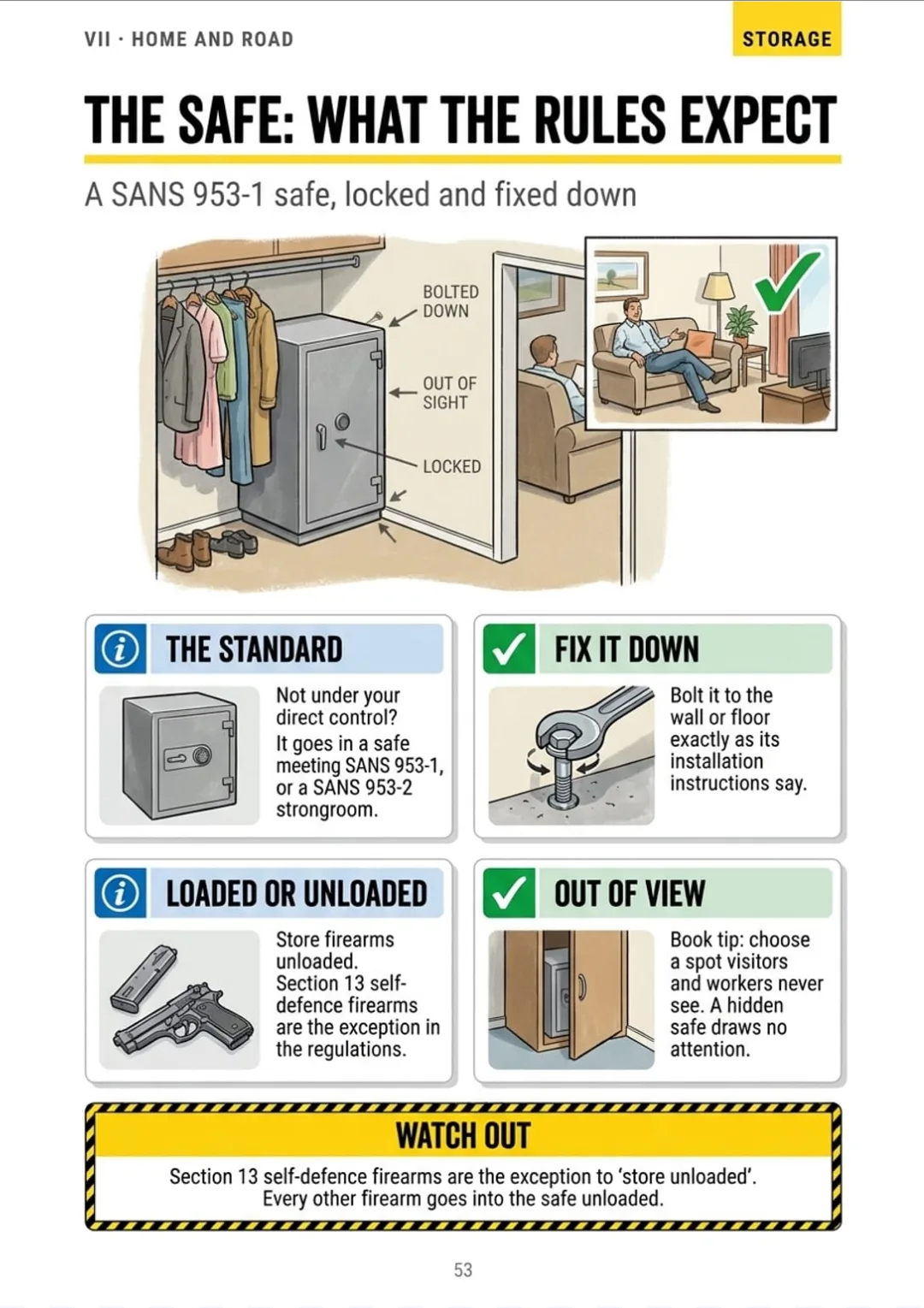
SANS 953-1 safe, bolted down, and unloaded storage except for section 13 self-defence firearms
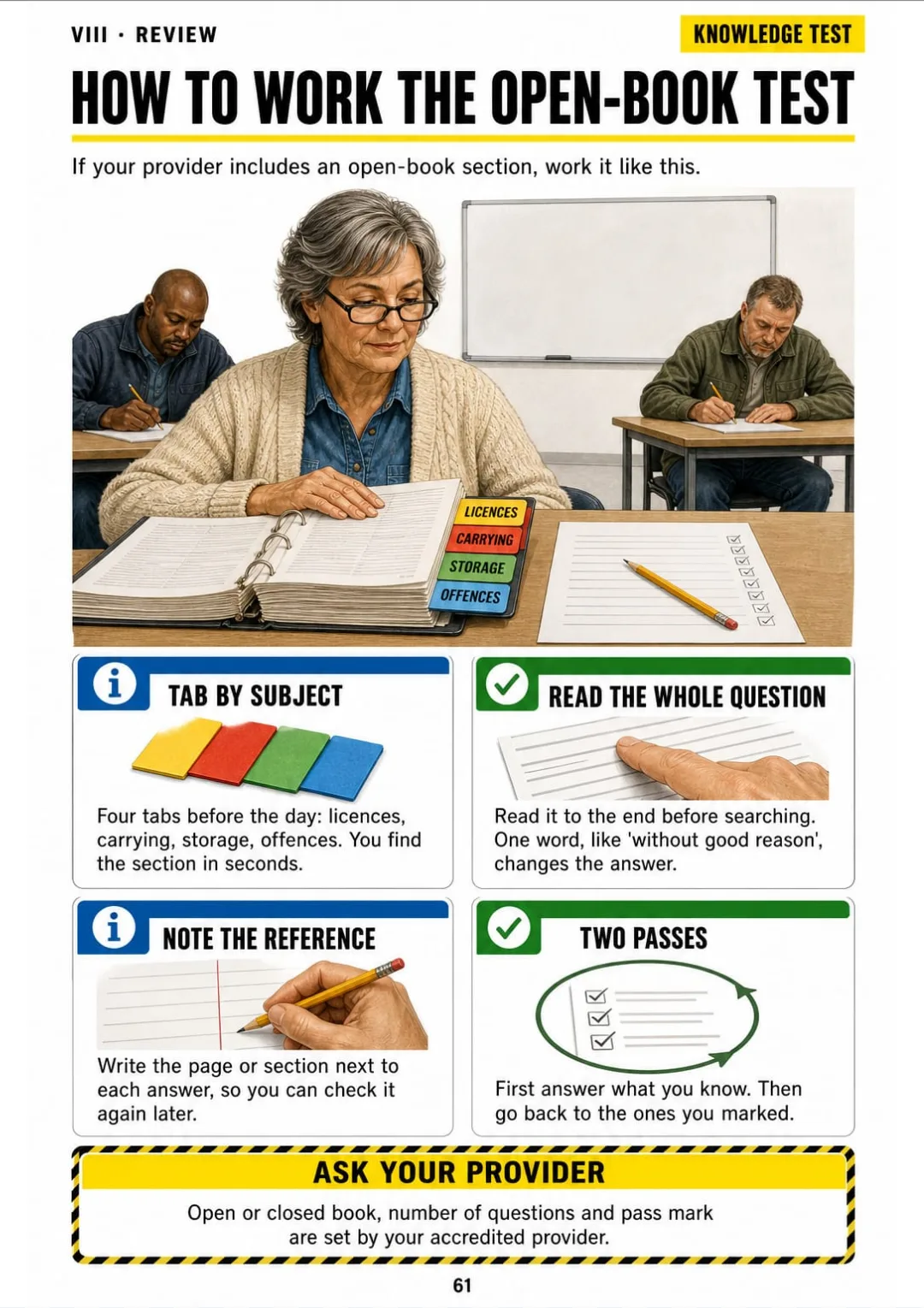
Four tabs, read the whole question, note the section, answer in two passes

Swipe to see more →

These are real pages from the book. The table of contents is the full one: 8 parts and 60 topics.

The Problem Isn't You. It's How It Was Explained to You.

You're at the bench on course day. The instructor lays out a handgun, a rifle and a shotgun and asks you to point to the action on each one. The whole group is waiting for your answer.

You read about firearm parts the night before. But the notes describe each family in its own paragraph, with its own wording, so muzzle, action and stock never connect in your head.

Muzzle, barrel, action, trigger, guard, stock or grip: the same labels on all three families

In the book, the three sit side by side on one page. Muzzle, barrel, action, trigger, guard, stock or grip: the same labels on all three, so you see they share one layout.

The rest works the same way: the cartridge in four parts, the four basic safety rules, range commands with their response, the safe at home and the five handling sequences. Each one has its own page.

So at the bench you look, you recognise the part and you point to it without going back to the notes.

COMPARE FOR YOURSELF

The Same Topic, Two Ways to Study It

THIS
  • The notes: line after line after line
  • The Act's purpose and definitions explained only in words
  • You arrive at the knowledge test unsure
In terms of the legislation, the framework that governs the possession of firearms seeks to balance several public interests, and its provisions must be read alongside the subordinate rules made in respect of it. Certain expressions used throughout carry defined meanings that differ from everyday usage, and an applicant is expected to tell them apart and to understand how each relates to the different licence types and to the competency categories dealt with elsewhere, before proceeding to the relevant assessment.
FOR THIS
  • What the Act is for, in one drawing
  • The four key terms in a box
  • You see it and it makes sense
The Act's three jobs and four key terms: firearm, ammunition, muzzle loader, prohibited firearm.
CONTENTS

Take a Look at the 8 Parts and 60 Topics

The road to your competency, the Act in plain words, knowing the firearm, ammunition, safe handling, the range, home and the road, and assessment-day review: 64 pages, all illustrated.

IThe Road to Your Competency · pp. 5-10
  1. Competency certificate or licence: two different papers
  2. From course to licence in five steps
  3. Which training you need
  4. The knowledge tests: open book and closed book
  5. The practical assessment: what the assessor watches
  6. Who may apply: the requirements in plain words
IIThe Act in Plain Words · pp. 11-20
  1. What the Act is for
  2. The licence types side by side
  3. Licence for self-defence
  4. Hunting and sport shooting: occasional or dedicated
  5. Business purposes: security work
  6. How much ammunition you may have
  7. Carrying a handgun in public
  8. Lending and transporting a firearm
  9. Lost or stolen: 24 hours
  10. Offences and renewal dates you must not forget
IIIKnow the Firearm · pp. 21-29
  1. Handgun, rifle, shotgun: side by side
  2. The self-loading pistol and its parts
  3. The revolver and its parts
  4. The manually operated rifle: the bolt action
  5. The self-loading rifle
  6. The pump-action shotgun
  7. Types of actions at a glance
  8. Safeties: what they do and what they don't
  9. Reading the markings on a firearm
IVAmmunition · pp. 30-34
  1. The cartridge in four parts
  2. Centrefire and rimfire
  3. Matching the calibre: headstamp and barrel
  4. Shotgun cartridges
  5. Storing and checking ammunition
VSafe Handling, Always in the Same Order · pp. 35-43
  1. The four basic safety rules
  2. What a safe direction really is
  3. Receiving a firearm: the steps
  4. Passing a firearm to someone else
  5. Making a pistol safe: the sequence
  6. Making a revolver safe
  7. Making a bolt-action rifle safe
  8. Making a pump shotgun safe
  9. The unloaded check: look, feel, confirm
VIAt the Range · pp. 44-52
  1. Range commands and the correct response
  2. Range rules before you step to the line
  3. Loading under command
  4. Stance
  5. Grip
  6. Sight alignment and sight picture
  7. Trigger control, breathing and follow-through
  8. Stoppages: misfire, hangfire and squib
  9. Holstering and leaving the line
VIIAt Home and on the Road · pp. 53-58
  1. The safe: what the regulations expect
  2. Keys and combinations
  3. Children in the house
  4. Cleaning safely
  5. In the vehicle and away from home
  6. If something goes wrong: the steps
VIIIReview and Assessment Day · pp. 59-64
  1. The five sequences on one page
  2. The Act on one page
  3. How to work the open-book test
  4. The most frequent handling mistakes
  5. Your assessment-day checklist
  6. Glossary in plain words

One Page, One Topic, All Clear

Think of it this way:

It's the practical assessment. The assessor hands you a pistol, says 'make it safe' and watches what you do first, and what comes next.

In the book you open the page for the pistol sequence and see it drawn on a bench: numbered steps, muzzle in a safe direction, finger off the trigger, magazine out, slide back, look, feel, confirm.

Loaded, muzzle, finger, target: the four habits behind every handling outcome

The same goes for the revolver, the bolt-action rifle, the pump shotgun, receiving and passing a firearm, and range commands: each one on its own page, always in the same order.

Firearm Competency Illustrated is 8 parts and 60 topics, all drawn, and at the end a review section with the five sequences and the Act on one page each.

What you see drawn, you don't have to memorize.

What's Inside Firearm Competency Illustrated:

Ipp. 5-10

The Road to Your Competency

Competency certificate or licence, the five steps from course to licence, which training you need, the open-book and closed-book tests, what the assessor watches and who may apply.

IIpp. 11-20

The Act in Plain Words

What the Act is for, the licence types side by side, self-defence, hunting and sport shooting, security work, ammunition limits, carrying, lending and transporting, loss or theft, offences and renewal dates.

IIIpp. 21-29

Know the Firearm

Handgun, rifle and shotgun side by side, the pistol, the revolver, the bolt action, the self-loading rifle, the pump shotgun, types of actions, safeties and markings.

IVpp. 30-34

Ammunition

The cartridge in four parts, centrefire and rimfire, matching the calibre, shotgun cartridges and storing ammunition.

Vpp. 35-43

Safe Handling, Always in the Same Order

The four basic safety rules and a safe direction, then receiving and passing a firearm and making a pistol, revolver, bolt-action rifle and pump shotgun safe, each in numbered steps, so you do the unloaded check in the same order every time.

VIpp. 44-52

At the Range

Range commands and responses, range rules, loading under command, stance, grip, sight picture, trigger control, stoppages and leaving the line.

VIIpp. 53-58

At Home and on the Road

The safe and what the regulations expect, keys and combinations, children in the house, cleaning safely, the vehicle and what to do if something goes wrong.

VIIIpp. 59-64

Review and Assessment Day

The five sequences on one page (receive, pass, make a pistol safe, make a revolver safe and the unloaded check; the bolt-action rifle and pump shotgun have their own pages in Part 5), the Act on one page, the open-book test, the most frequent handling mistakes, your assessment-day checklist and a plain-words glossary.

At the end of the book: A review section with the five sequences and the Act on one page each, an open-book test guide and a plain-words glossary.
Plus: 2 Free Books

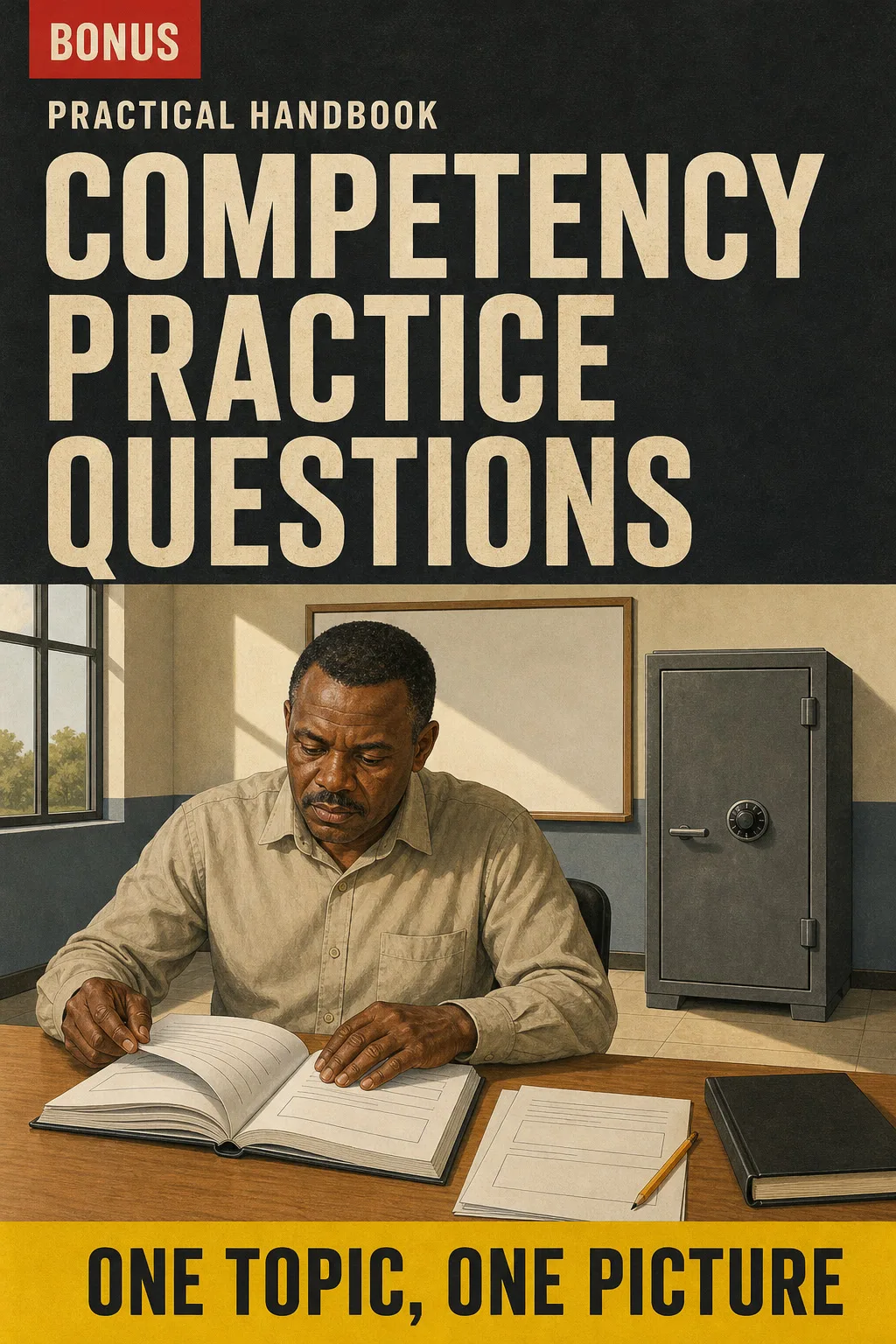
Competency Practice Questions

BONUS 1: «Competency Practice Questions»

Value on its own: US$ 17.90

Assessment-style questions on the Act, firearm parts and safety rules, with the answer explained, so you find your gaps before the open-book and closed-book tests.

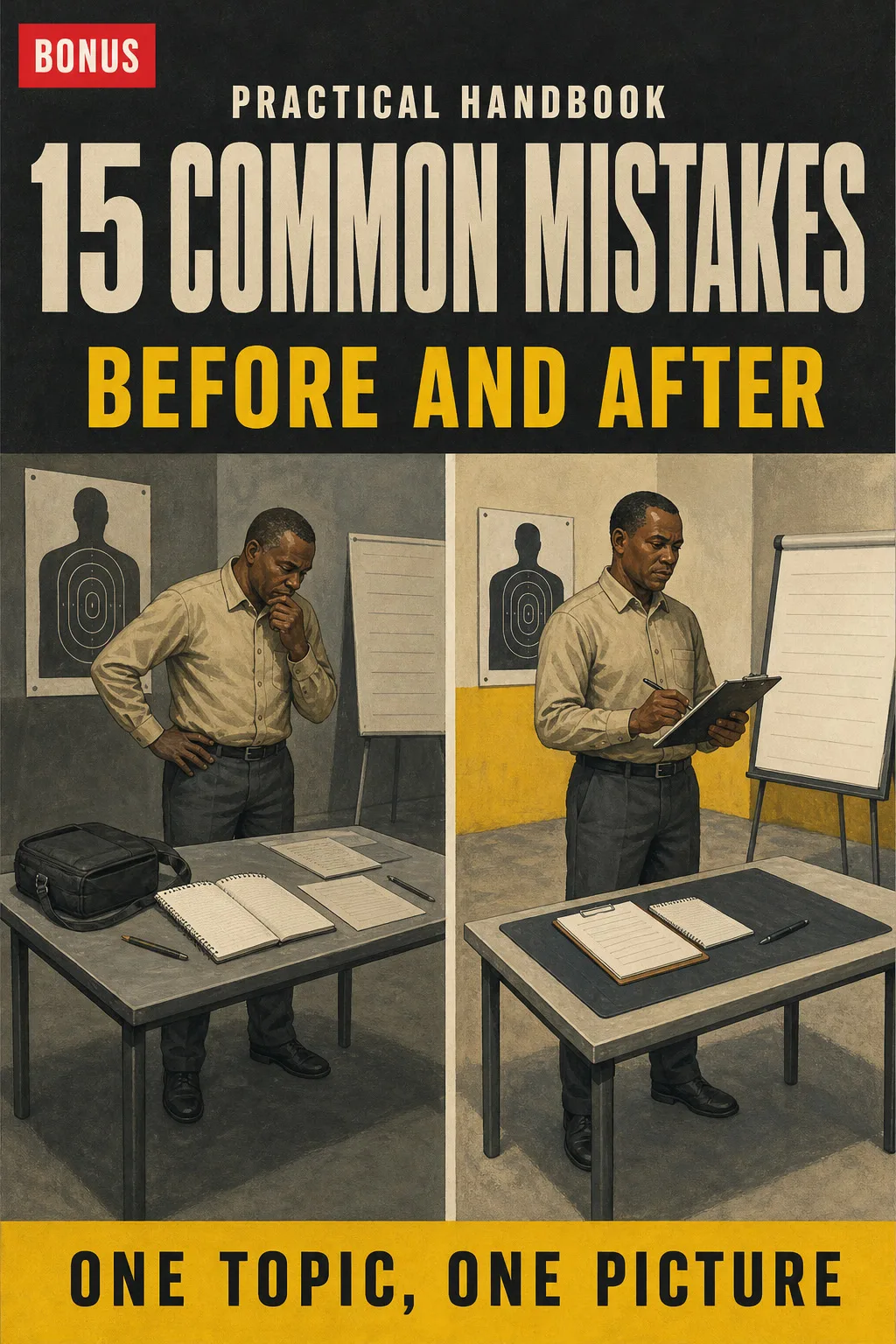
15 Common Mistakes: Before and After

BONUS 2: «15 Common Mistakes: Before and After»

Value on its own: US$ 14.90

The most frequent handling and storage mistakes drawn side by side with the correct version, for a quick review the night before.

Firearm Competency Illustrated with 2 Free Books

  • Firearm Competency Illustrated: 64 illustrated pagesUS$ 63
  • BONUS 1: Competency Practice QuestionsUS$ 17.90
  • BONUS 2: 15 Common Mistakes: Before and AfterUS$ 14.90
  • High-resolution PDF to printIncluded
Total value US$ 95.80
YOUR PRICE:
US$ 27
You save US$ 68.80
YES, I WANT FIREARM COMPETENCY ILLUSTRATED FOR US$ 27

📄 This is a digital PDF book sent to your email: nothing is printed or shipped.

Secure purchaseEncrypted payment30-day guarantee

PDF by email: We email you Firearm Competency Illustrated as a PDF, together with the two free books. It's a single payment: no installments, no extra charges.

Who This Book Is For

You've booked the course

You've booked the course

You arrive already knowing the parts, the four rules and what the Act is for, so the course day builds on what you've seen.

Your assessment is close

Your assessment is close

The five sequences and the Act on one page each, to go over in the evenings before the knowledge tests and the practical.

You work in security

One topic per page, so after a shift you study one drawing at a time and keep the handling routines in the same order.

Everything You Get Today

US$ 95.80US$ 27
YES, I WANT FIREARM COMPETENCY ILLUSTRATED FOR US$ 27

📄 This is a digital PDF book sent to your email: nothing is printed or shipped.

30DAYS
GUARANTEE

30-Day Guarantee

Try Firearm Competency Illustrated for 30 days, bonus books included.

We refund everything if the file won't open, if the book isn't what you see here, if you were charged twice or if the email doesn't arrive. Just email us.

You pay once. No subscriptions.

Frequently Asked Questions

Is it for me if I've never owned a firearm, or haven't written an exam in years?

Yes. It starts from what a competency certificate is and builds up one page at a time. If you've shot before, the sequences and the Act pages help you put the order in place.

Where does the content come from?

It is checked against the Firearms Control Act 60 of 2000 and the Firearms Control Regulations as currently published, the registered SAQA unit standards for firearm competency and SANS 953-1 for safes, explained in our own words.

Is it official material?

No. It is independent study material. It is not issued, approved or endorsed by SAPS, the Central Firearms Registry, SAQA or any training provider.

Does it replace the course?

No. You still complete your training and assessments with an accredited provider, and only that assessment leads to a competency certificate: this book doesn't give you one. Use it next to your course notes: the same topics, one drawing per page, always in the same order, to look at before course day and to review before the knowledge tests and the practical. It is study material, not legal advice.

Are the practice questions the ones in the assessment?

No. They are written for this book, in the style of the knowledge tests, to help you find your gaps.

When and how does it arrive?

The book and the 2 gift books arrive as PDFs by email, to the address you enter at checkout.

Do I have to pay every month?

No. It's a single payment, with no subscription.

Can I have it on paper?

Yes. The PDFs are made to print at home or at a print shop, in colour or black and white.

How does the refund work?

You have 30 days. We refund everything if the file won't open, if the book isn't what you see on this page, if you were charged twice or if the email doesn't arrive: just email us.

Before You Close This Page

No more rereading notes that don't stay with you.

The pistol sequence: you see it drawn, step by step.

You arrive at assessment day knowing where everything is.

Drawings make studying faster.

The book is right below.

One-time payment: US$ 27 · Guarantee: 30 days · PDF by email

YES, I WANT FIREARM COMPETENCY ILLUSTRATED FOR US$ 27

📄 This is a digital PDF book sent to your email: nothing is printed or shipped.